


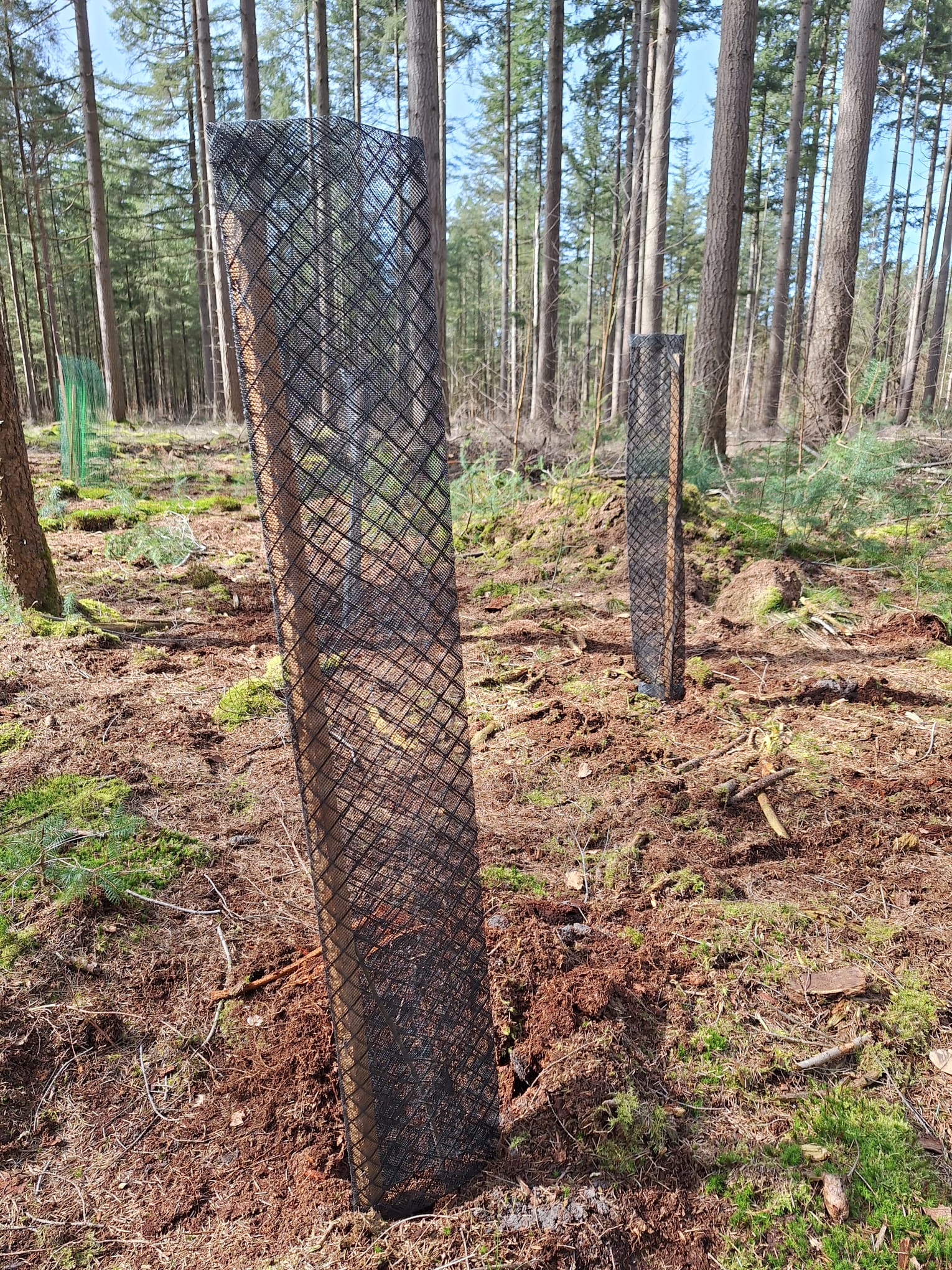
Black protective cover (2)
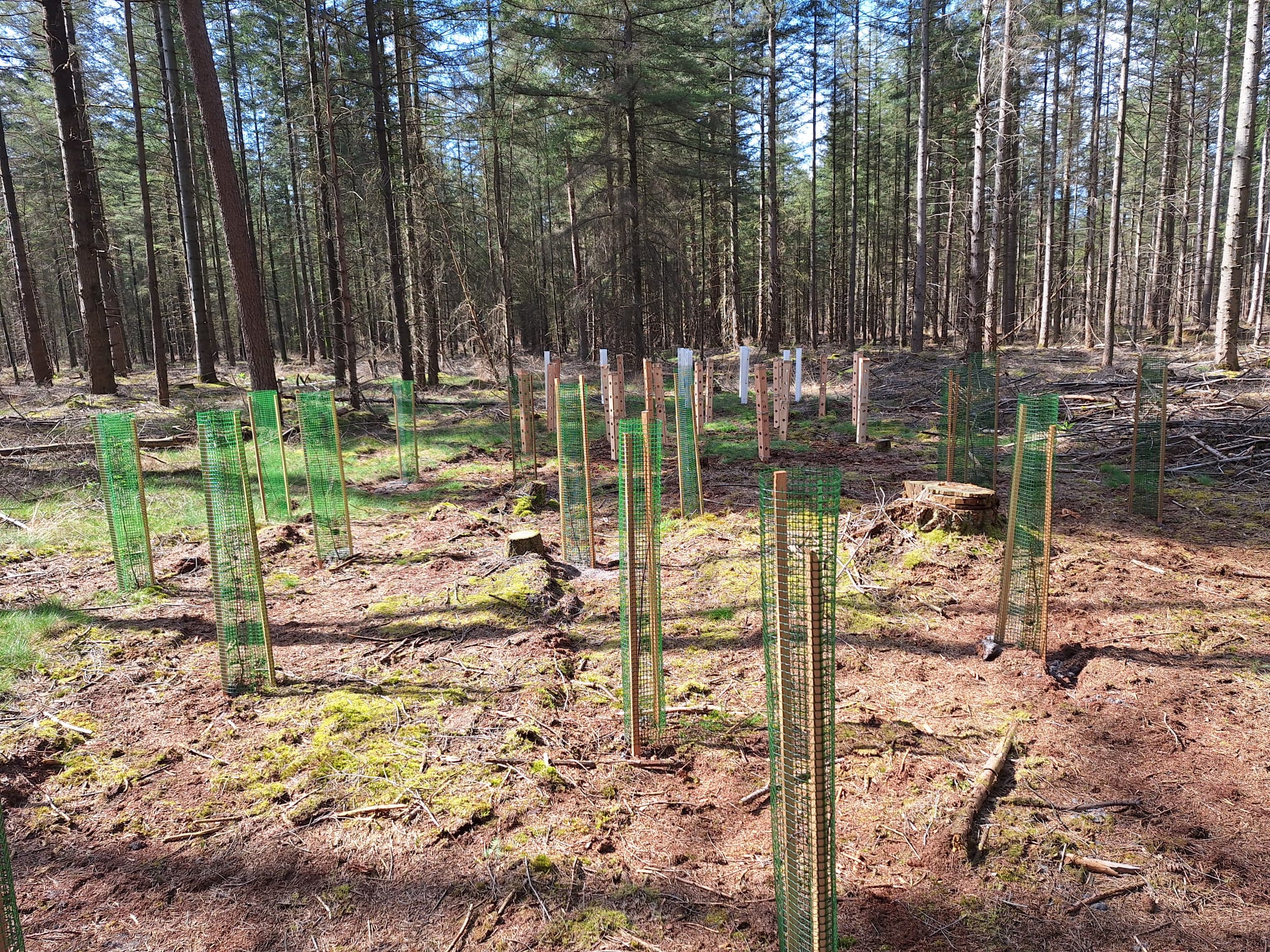
Plantagard (3)
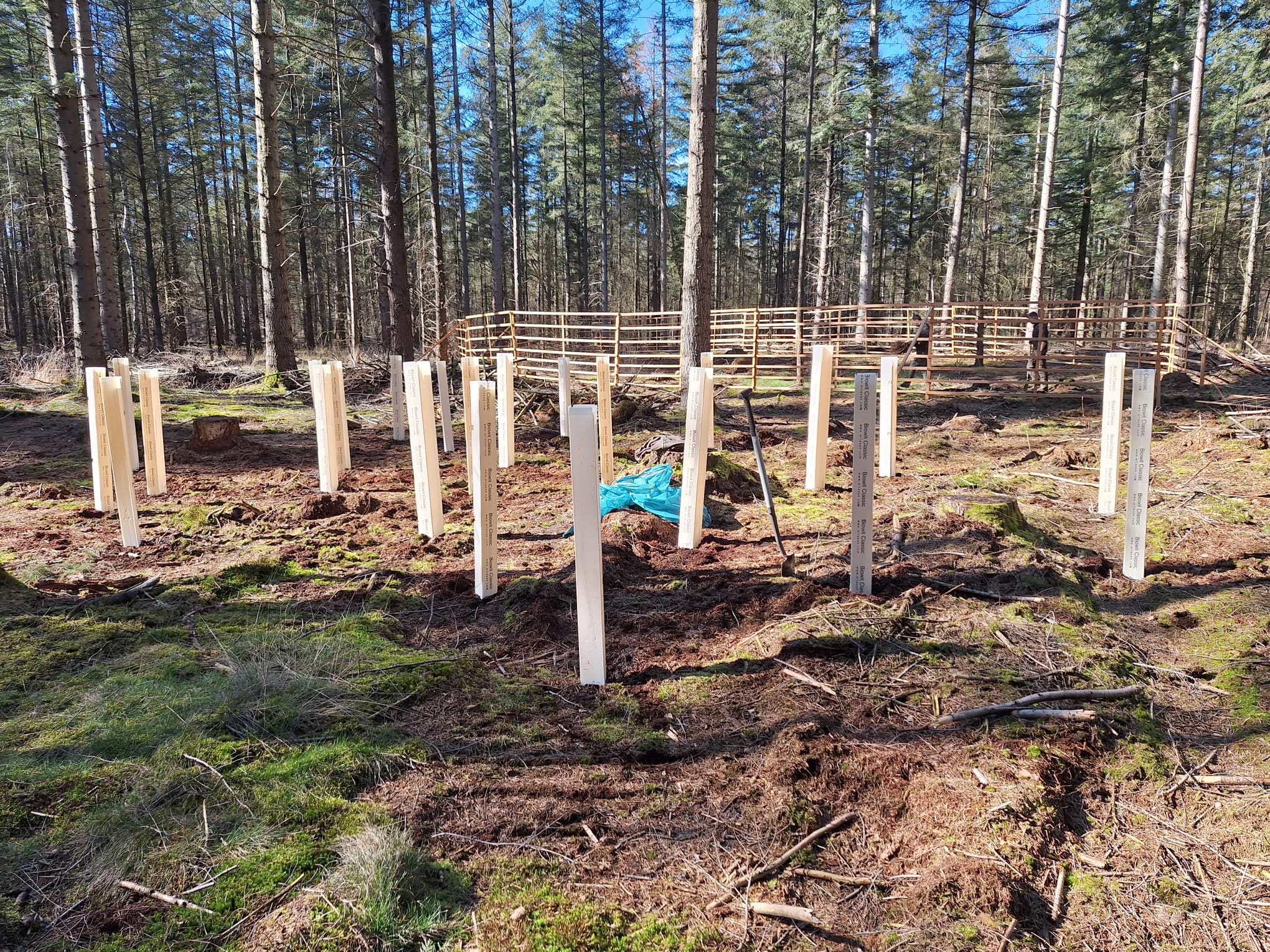
Biowit (4)
New planting with protection at the Hardenberg forestry demonstration site
In the spring of 2026, Lennart Baas and his colleagues from the IJsselvallei and Vechtdal team (Staatsbosbeheer) planted quite a few new climate-smart species in this LIFE Climate Forest demo forest.
This is the list of planted species:
- Castanea sativa - Sweet Chestnut
- Pinus pinaster – Maritime Pine
- Quercus petraea – Sessile oak
- Hornbeam
- Yew – Taxus
- Tilia cordata – Small-leaved lime
- Goat Willow
- Thuja plicata – Thuja
- Silver Lime
- Corylus colurna – Turkish Hazel
- Abies cephalonica – Greek Silver Fir
- Pinus ponderosa – Yellow pine
- Downy oak
- Wild Service Tree – Elsberg
- Fagus orientalis – Oriental beech
- Ostrya carpinifolia – European hop-hornbeam
- Cedrus atlantica – Atlas Cedar
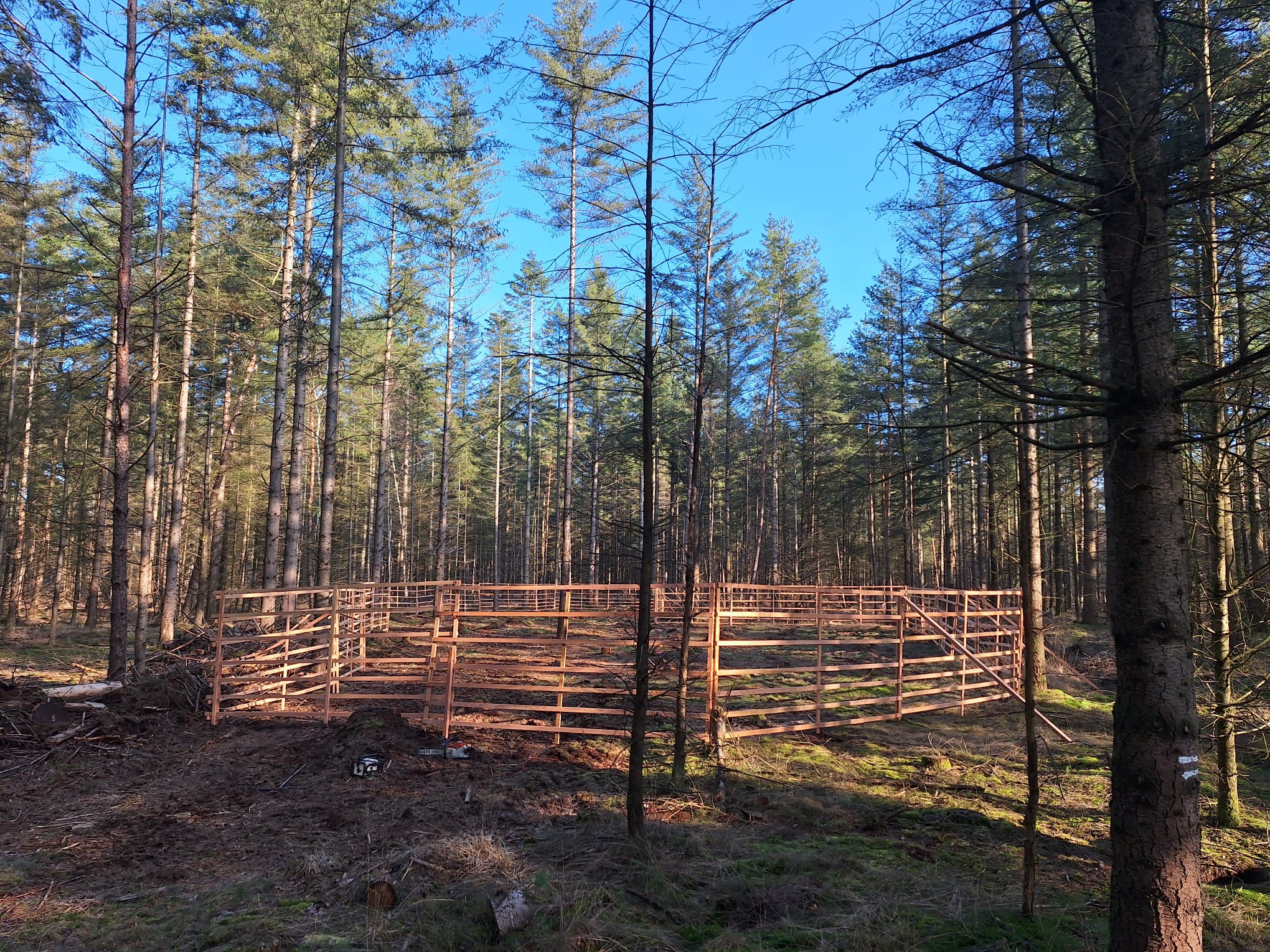
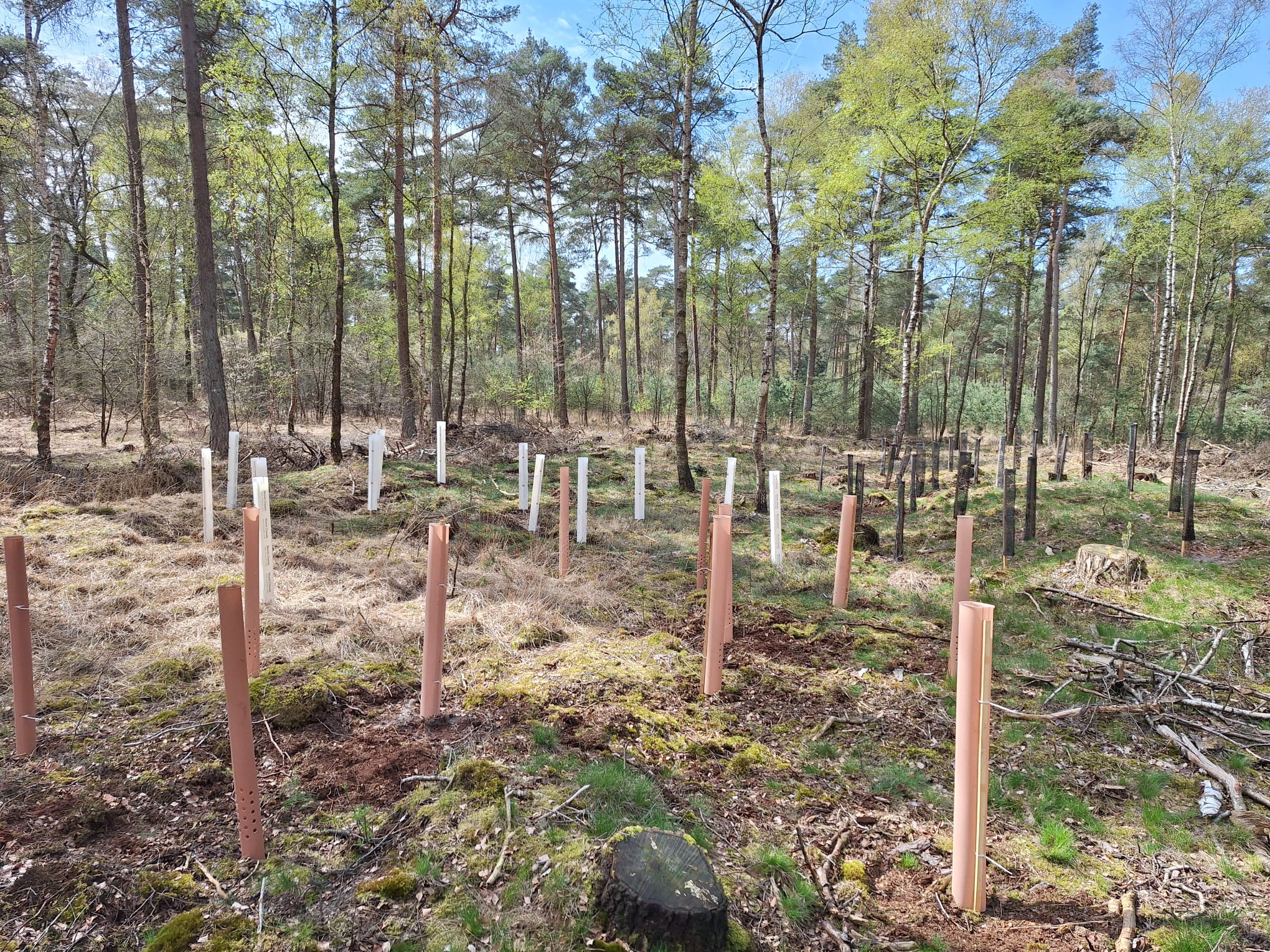
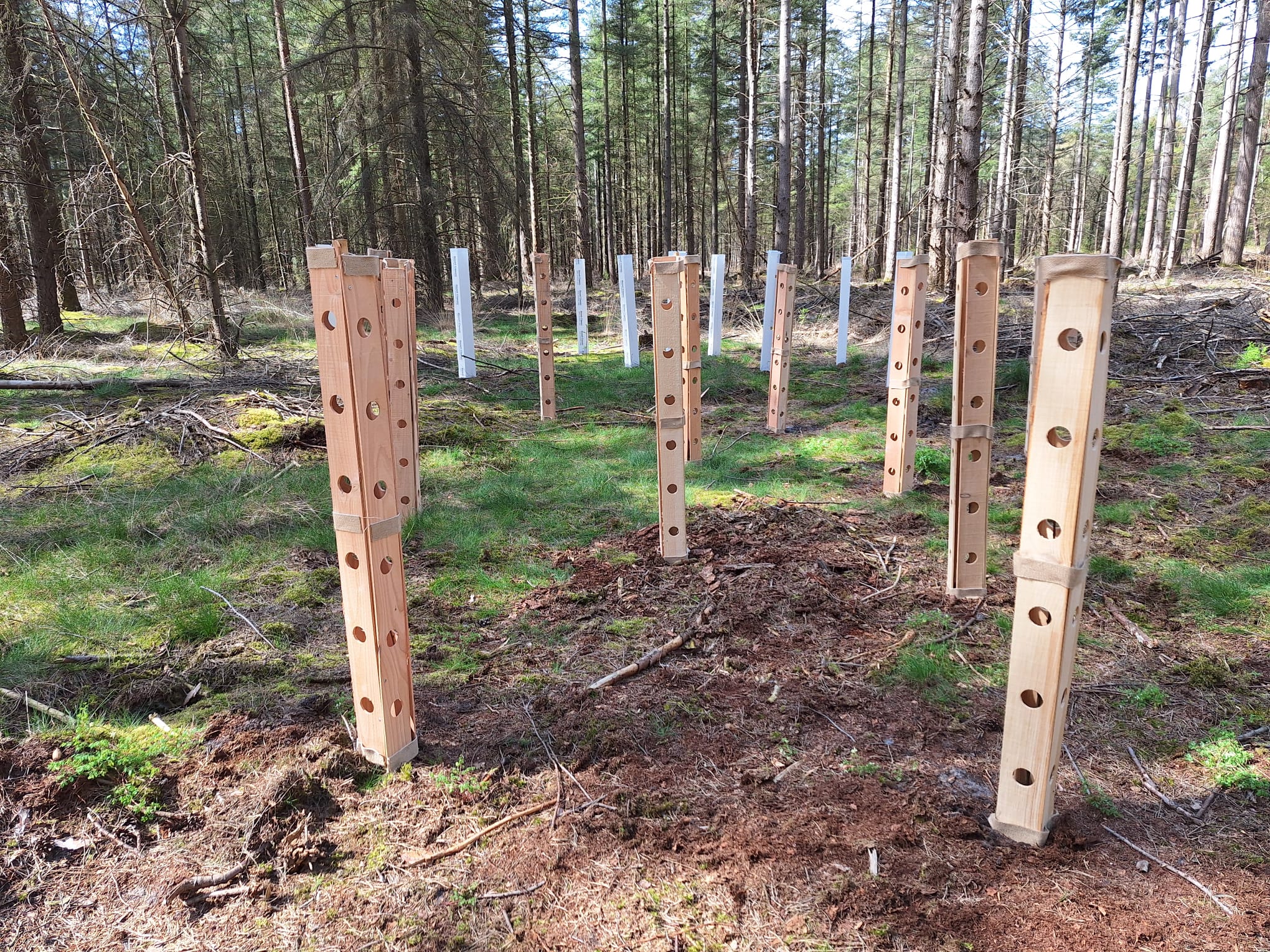
The new, young trees are also provided with the necessary protection against game. In Hardenberg, different types of protection have been used to test in practice which types of protection yield which results.
Group protection
- Gazing at grids, which are still reusable later.
- Wooden fencing of untreated woodphoto above).
Individual tree protection:
- Black tree guard made of plastic, attached with 1 stick (photo 2 alongside).
- Green plastic mesh (Plantagard), fitted with 2 stakes (photo 3 next to this).
- Biodegradable Treeshelter (Greensecure ), white tubes on wooden sticks.
- Biodegradable and compostable Biowit classic (photo 4 next to here).
- Wooden tubes tied together with jute string, biodegradable (photo below).
Tupoleum mosquito repellent with scent
Prikstoks made by Tupoleum have also been placed among the young plantings. These sticks emit an unpleasant smell for game. The base substances consist of oils, fragrances, distilled water, and liquid soap. The high proportion of oily substance leads to a very long-lasting evaporation of the active fragrances, meaning a long period of effectiveness. This exceptionally unpleasant and penetrating smell is completely harmless to health and not dangerous to the soil and groundwater (water-hazard class WGK 1).